You said: “I’ll go to another country, go to another shore, find another city better than this one. Whatever I try to do is fated to turn out wrong and my heart lies buried like something dead. How long can I let my mind moulder in this place? Wherever I turn, wherever I look, I see the black ruins of my life, here, where I’ve spent so many years, wasted them, destroyed them totally.”
You won’t find a new country, won’t find another shore. This city will always pursue you. You’ll walk the same streets, grow old in the same neighborhoods, turn gray in these same houses. You’ll always end up in this city. Don’t hope for things elsewhere: there’s no ship for you, there’s no road. Now that you’ve wasted your life here, in this small corner, you’ve destroyed it everywhere in the world.
When I die, I will see the lining of the world. The other side, beyond bird, mountain, sunset. The true meaning, ready to be decoded. What never added up will add Up, What was incomprehensible will be comprehended. – And if there is no lining to the world? If a thrush on a branch is not a sign, But just a thrush on the branch? If night and day Make no sense following each other? And on this earth there is nothing except this earth? – Even if that is so, there will remain A word wakened by lips that perish, A tireless messenger who runs and runs Through interstellar fields, through the revolving galaxies, And calls out, protests, screams.
bahār aa.ī to jaise yak-bār lauT aa.e haiñ phir adam se vo ḳhvāb saare shabāb saare jo tere hoñToñ pe mar-miTe the jo miT ke har baar phir jiye the nikhar ga.e haiñ gulāb saare jo terī yādoñ se mushkbū haiñ jo tere ushshāq kā lahū haiñ ubal paḌe haiñ azaab saare malāl-e-ahvāl-e-dostāñ bhī ḳhumār-e-āġhosh-e-mah-vashāñ bhī ġhubār-e-ḳhātir ke baab saare tire hamāre savāl saare javāb saare bahār aa.ī to khul ga.e haiñ na.e sire se hisāb saare
बहार आई तो जैसे यकबार लौट आए हैं फिर अदम से वो ख़्वाब सारे शबाब सारे जो तेरे होंटों पे मर मिटे थे जो मिट के हर बार फिर जिये थे निखर गए हैं गुलाब सारे जो तेरी यादों में मुश्कबू हैं जो तेरे उश्शाक़ का लहू हैं उबल पड़े हैं अज़ाब सारे मलाल ए अहवाल दोस्तां भी ख़ुमार ए आग़ोश ए महवशां भी ग़ुबार ए ख़ातिर के बाब सारे तेरे हमारे सवाल सारे जवाब सारे बहार आई तो खिल गए हैं नए सिरे से हिसाब सारे
bahār aa.ī to jaise yak-bār
Spring is here as if suddenly
lauT aa.e haiñ phir adam se
back from nowhere are
vo ḳhvāb saare shabāb saare
all those dreams, all those beauties of youth
jo tere hoñToñ pe mar-miTe the
those who died longing for your lips
jo miT ke har baar phir jiye the
those who came alive every time after being destroyed
nikhar ga.e haiñ gulāb saare
all the roses glisten
jo terī yādoñ se mushkbū haiñ
those that are fragrant with the musk of your memory
jo tere ushshāq kā lahū haiñ those that are the lifeblood of your lovers
ubal paḌe haiñ azaab saare all the torments have boiled over
malāl-e-ahvāl-e-dostāñ bhī the anguish and apprehensions about friends
ḳhumār-e-āġhosh-e-mah-vashāñ bhī the intoxication of warm embraces in the beauty of the moon
ġhubār-e-ḳhātir ke baab saare in our dust of memories
tire hamāre
yours and mine
savāl saare javāb saare all the questions, all the answers
bahār aa.ī to khul ga.e haiñ have opened up again, with spring
na.e sire se hisāb saare all the old accounts anew
So my literal, almost word-by-word clunky translation with words looked up in the dictionary goes something like this:
Spring is here as if suddenly
back from nowhere
are all those dreams, all those beauties of youth
those who died longing for your lips
those who came alive every time after being destroyed
all these roses glisten
fragrant with the musk of your memory the lifeblood of your lovers all the torments have boiled over the anguish and apprehensions about friends the intoxication of warm embraces in the beauty of the moon in this dust of memories
yours and mine all the questions, all the answers have opened up again, with spring all the old accounts anew
(Hurried translation draft by SD)
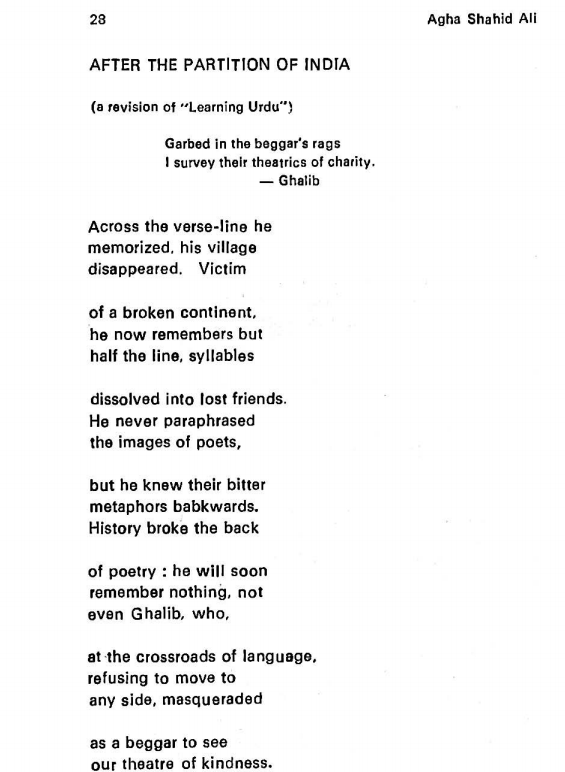
Agha Shahid Ali takes liberties and transcreates this as follows:
It Is Spring, Again
It is spring, And the ledger is opened again. From the abyss where they were frozen, those days suddenly return, those days that passed away from your lips, that died with all our kisses, unaccounted. The roses return: they are your fragrance; they are the blood of your lovers. Sorrow returns. I go through my pain and the agony of friends still lost in the memory of moon-silver arms, the caresses of vanished women. I go through page after page. There are no answers, and spring has come once again asking the same questions, reopening account after account.
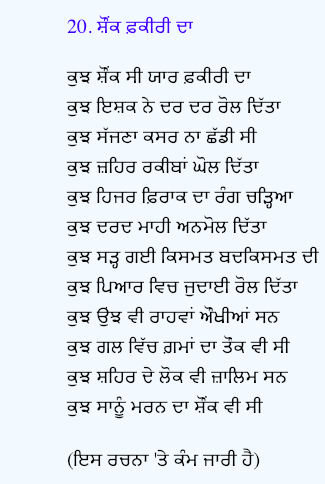
kis daa dosh sii kis daa nahin sii ae galaan hun karan diaan nahin veley lang gaye hun tauba waaley raataan hun hokey bharan diaan nahiin jo hoyaa tey honaa hii sii tey honiaan rokey rukdiaan nahiin ik varii jadon shuru ho jaavey tey gal phir awain mukdii nahin kujh unjh vii rawaan aukhiaan sii kujh gal wich gam daa tauq vii sii kujh shahar dey loq vii zaalim san kujh saanuu maran daa shauq vii sii
First rough draft: Sundeep Dougal
Whose fault was it, whose was it not There’s no point talking about it now The time to repent is now gone The nights now are not to sob What happened had to happen And what has to happen cannot be stopped And once it starts The topic does not end just like that As it is the path was not easy As it is the subject was subsumed by sadness As it is the people of the city were cruel As it is I had a death wish too.
Apparently there are more verses in this before the last four lines:
There was neither non-existence nor existence then; there was neither the realm of space nor the sky which is beyond. What stirred? Where? In whose protection? Was there water, bottomlessly deep?
सृष्टी से पहले सत् नहीं था, असत् भी नहीं अन्तरिक्ष भी नहीं, आकाश भी नहीं था छिपा था क्या? कहाँ? किसने ढका था? उस पल तो, अगम अतल जल भी कहाँ था?
न मृत्युरासीदमृतं न तर्हि न रात्र्या अह्न आसीत्प्रकेतः । आनीदवातं स्वधया तदेकं तस्माद्धान्यन्न परः किञ्चनास ॥२॥
There was neither death nor immortality then. There was no distinguishing sign of night nor of day. That one breathed, windless, by its own impulse. Other than that there was nothing beyond.
नहीं थी मृत्यू, थी अमरता भी नहीं नहीं था दिन, रात भी नहीं हवा भी नहीं, साँस थी स्वयमेव फिर भी नही था कोई कुछ भी, परमतत्त्व से अलग या परे भी।।
Darkness was hidden by darkness in the beginning; with no distinguishing sign, all this was water. The life force that was covered with emptiness, that one arose through the power of heat.
अंधेरे में अंधेरा-मुँदा अँधेरा था जल भी केवल निराकार जल था परमतत्त्व था सृजन-कामना से भरा, ओछे जल से घिरा, वही अपनी तपस्या की महिमा से उभरा ।।
Desire came upon that one in the beginning; that was the first seed of mind. Poets seeking in their heart with wisdom found the bond of existence in non-existence.
परम मन में बीज पहला जो उगा काम बनकर वह जगा कवियों ग्यानियों ने जाना असत् और सत् का निकट संबंध पहचाना ।।
Their cord was extended across. Was there below? Was there above? There were seed-placers; there were powers. There was impulse beneath; there was giving-forth above.
फैले संबंध के किरण धागे तिरछे परमतत्त्व उस पल ऊपर या नीचे? वह था बँटा हुआ, पुरुष और स्त्री बना हुआ ऊपर दाता वही भोक्ता, नीचे वसुधा स्वधा भोग्या ।।
को अद्धा वेद क इह प्र वोचत्कुत आजाता कुत इयं विसृष्टिः | अर्वाग्देवा अस्य विसर्जनेनाथा को वेद यत आबभूव ॥६॥
Who really knows? Who will here proclaim it? Whence was it produced? Whence is this creation? The gods came afterwards, with the creation of this universe. Who then knows whence it has arisen?
सृष्टी यह बनी कैसे? किससे? आई है कहाँ से? कोई क्या जानता है? बता सकता है? देवताओं को नहीं ग्यात, वे आए सृजन के बाद सृष्टी को रचां है जिसने, उसको जाना किसने? ।।
इयं विसृष्टिर्यत आबभूव यदि वा दधे यदि वा न | यो अस्याध्यक्षः परमे व्योमन्त्सो अङ्ग वेद यदि वा न वेद ॥७॥
Whence this creation has arisen – perhaps it formed itself, or perhaps it did not – the one who looks down on it, in the highest heaven, only he knows – or perhaps he does not know.
सृष्टी का कौन है कर्ता? कर्ता है वा अकर्ता? ऊँचे आकाश में रहता, सदा अध्यक्ष बना रहता वही सचमुच में जानता, या नहीं भी जानता है किसी को नहीं पता, नहीं पता, नहीं है पता ।।
HIRANYAGARBHA was present at the beginning; when born, he was the sole lord of created beings; he upheld this earth and heaven, –let us offer worship with an oblation to the divine KA.
था हिरण्य गर्भ सृष्टि से पहले विद्यमान . वोही तो सारे भूत जाती का स्वामी महान . जो है अस्तित्वमान धरती आसमान धारण कर. ऐसे किस देवता की उपासना करे हम हवी देकर?
vah thaa Hiranyagarbh shristi sey pehley vidyamaan vahi to saarey bhuut jaat ka swami mahaan jo hai astitvamaan dharti aasmaan dhaaran kar aisey kis devata ki upaasanaa karen hum havi dekar
– Rig Veda Rig Veda 10.121.1
येन द्यौरुग्रा पृथ्वी च दृढा येन स्वस्तभितं येननाकः । यो अन्तरिक्षे रजसो विमानः कस्मै देवाय हविषा विधेम ॥
yena dayaurugrā parthivī ca darḻhā yena sava satabhitaṃ yenanākaḥ | yo antarikṣe rajaso vimānaḥ kasmai devāyahaviṣā vidhema ||
By whom the sky was made profound and the earth solid, by Whom heaven and the solar sphere were fixed, who was the measure of the water in the firmament,- let us offer worship with an oblation to the divine KA
जिस के बल पर तेजोमय है अम्बर . पृथ्वी हरी भरी स्थापित स्थिर. स्वर्ग और सूरज भी स्थिर. ऐसे किस देवता की उपासना करे हम हवी देकर?
jiskey bal par taejomay hai ambar prithvi hari-bhari sthaapit-sthir swarg aur suuraj bhi sthir aisey kis devata ki upaasanaa karen hum havi dekar
āpo ha yada barhatīrviśvamāyana garbhaṃ dadhānājanayantīragnima | tato devānāṃ samavartatāsurekaḥkasmai devāya haviṣā vidhema ||
When the vast waters overspread the universe containing the germ and giving birth to AGNI, then was produced the one breath of the gods, – let us offer worship with an oblation to the divine KA.
गर्भ में अपने अग्नि धारण कर पैदा कर, व्याप था जल इधर उधर नीचे ऊपर, जगाचुके वो का एकमेव प्राण बनकर, ऐसे किस देवता की उपासना करे हम हवी देकर?
garbh mey apney agni dhaaran kar payda kar vyaapa thaa jal idhar-udhar neechey-ooper jaga jo devoon ka ekmayv praan ban kar aisey kis devata ki upaasanaa karen hum havi dekar
– Rig Veda 10.121.7
मा नो हिंसीज्जनिता यः पर्थिव्या यो वा दिवंसत्यधर्मा जजान । यश्चापश्चन्द्रा बर्हतीर्जजानकस्मै देवाय हविषा विधेम ॥
mā no hiṃsījjanitā yaḥ parthivyā yo vā divaṃsatyadharmā jajāna | yaścāpaścandrā barhatīrjajānakasmai devāya haviṣā vidhema ||
May he do us no harm who is the parent of the -earth, or who the unerring support (of the world) begat the heaven, and who generated the vast and delightful waters, – let us offer worship with an oblation to the divine KA.
ॐ ! सृष्टि निर्माता स्वर्ग रचयिता पूर्वज रखस कर. सत्य धर्म पालक अतुल जल नियामक रक्षा कर. फैली हैं दिशाएं बहु जैसी उसकी सब में सब पर, ऐसे ही देवता की उपासना करे हम हवी देकर, ऐसे ही देवता की उपासना करे हम हवी देकर.”
ho.. srishti nirmaata swarg rachayta poorvaj raksha kar satya dharm palak atul jal niyaamak raksha kar phaili hain dishaayen baahu jaisi uski submey subpar aisey hi devata ki upaasanaa karen hum havi dekar aisey hi devata ki upaasanaa karen hum havi dekar
न था कुछ तो ख़ुदा था कुछ न होता तो ख़ुदा होता डुबोया मुझ को होने ने न होता मैं तो क्या होता हुआ जब ग़म से यूँ बे-हिस तो ग़म क्या सर के कटने का न होता गर जुदा तन से तो ज़ानू पर धरा होता हुई मुद्दत कि ग़ालिब मर गया पर याद आता है वो हर इक बात पर कहना कि यूँ होता तो क्या होता

 Juvenilia