After the Partition of India: Agha Shahid Ali
I
क्या कहूं हाले दर्दे–पिन्हा़नी
वक्त कोताह किस्सा तूलानी
ऐशे–दुनिया से हो गया दिल सर्द
देख कर रंगे–आलमे–फ़ानी
कुछ नहीं जुज़ तिलिस्म–ख्वाबो–ख़याल
गोशे– फ़क्रो–बज़्मे–सुल्तानी
है सरासर फ़रेबे–वहमों–गुमाँ
ताजे–फ़ग़फ़ूरो–तख्ते–खा़कानी
बे–हकी़क़त है शक्ले–मौजे–सराब
जामे–जमशेद व राहे–रैहानी
लफ़्ज़े–मुहमल है नुत्के़–आराबी
हर्फ़े–बातिल है अ़क्ले–यूनानी
एक धोका है लह्ने–दाऊदी
एक तमाशा है हुस्ने–कन्आनी
न करुँ तिश्नगी में तर लबे–खुश्क
चश्मः–ए–खिज़्र का हो गर पानी
लूँ न इकमुश्त ख़ाक के बदले
गर मिले खा़तिमे–सुलैमानी
बहरे– हस्ती बजुज़ सराब नहीं
चश्मः–ए–ज़िन्दगी में आब नही।
II
जिससे दुनिया ने आशनाई की
उसने आख़िर को कज़–अदाई की
तुझ पे भूले कोई अबस ऐ उम्र
तूने की जिससे बेवफाई की
है ज़माना वफ़ा से बेगाना
हाँ कसम मुझको आशनाई की
यह वह बे–मेहर है की इसकी
सुलह में चाशनी लड़ाई की
है यहाँ हज़्जे़–वस्ल से महरूम
जिसको ताक़त न हो जुदाई की
है यहाँ हिफ़्ज़े–वजा़ से मायूस
जिसको आदत न हो गदाई की
खंदः–ए–गुल से बेबका़–तर है
शान हो जिसमें दिलरुबाई की
जिन्स–ए–कासिद से नारवातर है
खूबियाँ जिसमें हो खुदाई की
बात बिगड़ी रही सही अफसोस
आज खा़कानी व सनाई की
रश्के–उर्फी व फ़ख्रे–तालिब मुर्द
असद उल्लाह खाँ गालिब मुर्द
III
बुलबुले–हिंद मर गया हैहात
जिसकी थी बात बात में एक बात
नुक्तादां, नुक्तासंज, नुक्ताशनास
पाक दिल, पाक जात, पाक सिफ़ात
शैख़ और बज़्ला–संजो–शोख़ मिज़ाज
रिंद और मर्जा–ए–करामो–सेका़त
लाख मज़मून और उसका एक ठठोल
सौ तकल्लुफ़ और उसकी सीधी बात
दिल में चुभता था वह अगर बिस्मिल
दिन को कहता दिन और रात को रात
हो गया नक़्श दिल पे जो लिक्खा
कलम उसका था और उसकी दवात
थीं तो दिल्ली में उसकी बातें थीं
ले चलें अब वतन को क्या सौगा़त
उसके मरने से मर गई दिल्ली
मिर्ज़ा नौशा था और शहर बरात
याँ अगर बज़्म थी तो उसकी बज़्म
याँ अगर ज़ात थी उसकी ज़ात
एक रौशन–दिमाग़ था , न रहा
शहर में इक चिराग़ था, न रहा
IV
दिल को बातें जब उसकी याद आएँ
किसकी बातों से दिल को बहलाएं
किसको जाकर सुनाएँ शे‘रो–ग़ज़ल
किससे दादे–सुखनवरी पाएँ
मर्सिया उसका लिखते हैं एहबाब
किससे इस्लाह लें, किधर जाएँ
पस्त मज़मून है नौहा–ए–उस्ताद
किस तरह आसमाँ पे पहुंचाएं
लोग कुछ पूछने को आए हैं
अहले–मय्यत जनाज़ा ठहराएं
लायेंगे फिर कहाँ से ग़ालिब को
सूए–मदफ़न अभी न ले जाएँ
उसको अगलों में क्यूं न देन तरजीह
अहले इंसाफ़ गौ़र फ़रमायें
कुदसी व साइब व असीर व कलीम
लोग जो चाहें उनको ठहराएं
हमने सबका कलाम देखा है
है अदब शर्त मुँह न खुलवाएं
गालिबे–नुक्तादां से क्या निस्बत
ख़ाक को आसमाँ से क्या निस्बत
V
नस्र, हुस्नो–जमाल की सूरत
नज़्म, गंजो–दलाल की सूरत
तहनियत इक निशात की तस्वीर
ताज़ियत इक मलाल की सूरत
का़ल उसका वह आइना जिसमें
नज़र आती थी हाल की सूरत
इसकी तौजीह से पकड़ती थी
शक्ले–इम्काँ महाल की सूरत
इसकी तावील से बदलती थी
रंगे–हिज्राँ विसाल की सूरत
लुत्फे–आगाज़ से दिखाता था
सुखन इसका मआल की सूरत
चश्मे–दौरान से आज छुपती है
अनवरी व कमाल की सूरत
लौहे–इम्काँ से आज मिटती है
इल्मों –फ़ज़्लो–कमाल की सूरत
देखा लो आज फिर न देखोगे
गा़लिबे–बेमिसाल की सूरत
अब न दुनिया में आएँगे यह लोग
कहीं ढूंढें न पाएँगे यह लोग
VI
शहर में जो है सोगवार है आज
अपना बेगाना अश्कबार है आज
नाज़िशे-ख़ल्क का महल न रहा
रिहलते-फ़ख्रे-रोज़गार है आज
था जमाने में एक रंगीन तबा
रुखसते-मौसम-बहार है आज
बारे-एहबाब जो उठाता था
दोशे-एहबाब पर सवार है आज
थी हर इक बात नीशतर जिसकी
उसकी चुप से जिगर फ़िगार है आज
दिल में मुद्दत से थी खलिश जिसकी
वही बर्छी जिगर के पार है आज
दिले-मुज़्तर को कौन दे तस्कीन
मातम-यारे-गमगुसार है आज
तल्खी-ए-गम कही नहीं जाती
जाने-शीरीं भी नागवार है आज
किसको लाते हैं बहरे-दफ़्न कि कब्र
हमातन चश्मे-इन्तिज़ार है आज
ग़म से भरता नहीं दिले-नाशाद
किससे खाली हुआ जहाँनाबाद
VII
नक्दे-मानी का गंजदाँ न रहा
ख्वाने-मज़मून का मेज़बां न रहा
साथ उसके गई बहारे-सुखन
अब कुछ अंदेशा-ए-खिजां न रहा
हुआ एक एक कारवां सालार
कोई सालार-कारवां न रहा
रौनके-हुस्न था बयाँ उसका
गर्म-बाजार-गुलारुखाँ न रहा
इश्क़ का नाम उससे रौशन था
कैसो-फरहाद का निशाँ न रहा
हो चुकी हुस्नो-इश्क़ कि बातें
गुलो-बुलबुल का तर्जुमा न रहा
अहले-हिंद अब करेंगे किस पर नाज़
रश्के-शीराजो-इस्फ़हाँ न रहा
ज़िंदा क्यूं कर रहेगा नामे-मुलुक
बादशाहों का मदहख्वान न रहा
कोई वैसा नज़र नहीं आता
वह जमीं और वह आसमाँ न रहा
उठा गया था जो मायादारे-सुख़न
किसको ठहराएं अब मदार-सुख़न
VIII
क्या है वह जिसमें वह मर्देकार न था
इक ज़माना कि साज़गार न था
शाइरी का किया हक़ इसने अदा
पर कोई उसका हक्गुज़ार न था
बे-सिला मदह, शे’रे-बे-तहसीन
सुखन उसका किसी पे बार न था
नज़ारे-सेल थी जान तक, लेकिन
दराखुरे-हिम्मत-इक्तिदार न था
मुल्को-दौलत से बहरावर न हुआ
जान देने पे इख्तियार न था
खाकसारों से खाकसारी थी
सर्बुलान्दों से इन्किसार न था
ऐसे पैदा कहाँ हैं मस्तो-ख़राब
हमने माना कि होशियार न था
मज़हरे-शाने-हुस्ने-फितरत था
मानी-ए-लफ्जे-आदमीयत था
कुछ नहीं फर्क बागो-जिन्दां में
आज बाबुल नहीं गुलिस्तां में
IX
शहर सारा बना है बीते-हुज़्न
एक यूसुफ़ नहीं जो कन्हान में
मुल्क यकसर हुआ है बेआईन
एक फलातून नहीं जो यूनाँ में
ख़त्म थी इक ज़बान पे शीरीनी
ढूँढते क्या हो सबो -रुम्मां में
हस्र थी इक बयाँ में रंगीनी
क्या धरा है अकीकों-मरजाँ में
लबे-जादू बयाँ हुआ खामोश
गोशे-गुल वा है क्यूं गुलिस्तां में
गोशे-मानी शुनो हुआ बेकार
मुर्ग क्यूं नाराज़ं है बुस्तां में
वह गया जिससे बज़्म थी रौशन
शमा जलती है क्यूं शबिस्ताँ में
न रहा जिससे था फरोगे-नज़र
सुरमा बनता है क्यूं सफ़ाहा में
माहे-कामिल में आगई ज़ुल्मत
आबे-हैवाँ पे छा गई ज़ुल्मत
X
हिंद में नाम पायेगा अब कौन
सिक्का अपना बिठाएगा अब कौन
हमने जानी है इससे कदर-सलफ़
उन पर ईमान लाएगा अब कौन
उसने सब को भुला दिया दिल से
उसको दिल से भुलायेगा अब कौन
थी किसी की न जिसमें गुंजाइश
वह जगह दिल में पायेगा अब कौन
उससे मिलने को याँ हम आते थे
जाके दिल्ली से आयेगा अब कौन
मर गया कद्र्दाने-फहम-सुखन
शे’र हमको सुनाएगा अब कौन
मर गया तिश्नः-ए-मज़ाके-कलाम
हमको घर में बुलाएगा अब कौन
था बिसाते-सुख़न में शातिर एक
हमको चालें बताएगा अब कौन
शे’र में नातमाम है ‘हाली’
ग़ज़ल इसकी बनाएगा अब कौन
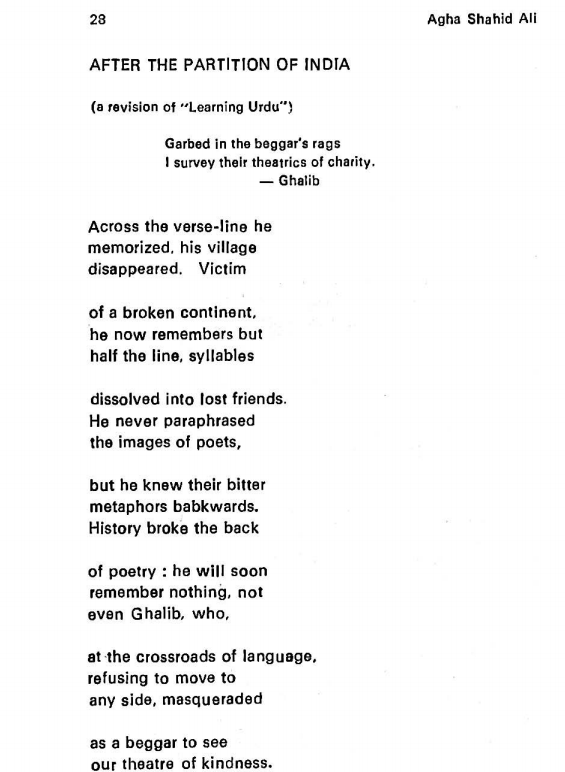
(after Ghalib)
Just a few return from dust, disguised as roses.
What hopes the earth forever covers, what faces?
I too could recall moonlit roofs, those nights of wine—
But Time has shelved them now in Memory’s dimmed places.
She has left forever, let blood flow from my eyes
till my eyes are lamps lit for love’s darkest places.
All is his—Sleep, Peace, Night—when on his arm your hair
shines to make him the god whom nothing effaces.
With wine, the palm’s lines, believe me, rush to Life’s stream—
Look, here’s my hand, and here the red glass it raises.
See me! Beaten by sorrow, man is numbed to pain.
Grief has become the pain only pain erases.
World, should Ghalib keep weeping you will see a flood
drown your terraced cities, your marble palaces.
– Agha Shahid Ali
This, again, is not a translation but a tip of the hat to Ghalib’s ghazal:
Chances are that Ali would be more familiar with the Begum Akhtar version, introduced here by Kaifi Azmi, on Ghalib’s 100th death anniversary:
Though a slightly younger generation perhaps would know it better in Jagjit Singh’s voice:
The text and translation below is from Frances Pritchett’s excellent site.
sab kahāñ kuchh lālah-o-gul meñ numāyāñ ho gaʾīñ
ḳhāk meñ kyā ṣūrateñ hoñgī kih pinhāñ ho gaʾīñ
Not all but some faces were able to become manifest in the form of tulips and roses
How many more faces there must be that became hidden
yād thīñ ham ko bhī rangārang bazm-ārāʾiyāñ
lekin ab naqsh-o-nigār-e t̤āq-e nisyāñ ho gaʾīñ
we too remembered colourful party-adornings
but now they have become ornaments in the niche of forgetfulness
thīñ banāt ul-naʿsh-e gardūñ din ko parde meñ nihāñ
shab ko un ke jī meñ kyā āʾī kih ʿuryāñ ho gaʾīñ
the Daughters of the Bier of the heavens were hidden, by day, in pardah
at night, what came into their inner-self, that they became naked?
qaid meñ yaʿqūb ne lī go nah yūsuf kī ḳhabar
lekin āñkheñ rauzan-e dīvār-e zindāñ ho gaʾīñ
although Jacob didn’t get news of Joseph in prison
still, his eyes became crevice-work in the wall of the cell
sab raqīboñ se hoñ nā-ḳhvush par zanān-e miṣr se
hai zulaiḳhā ḳhvush kih maḥv-e māh-e kanʿāñ ho gaʾīñ
all [lovers] may be unhappy with Rivals, but with the women of Egypt
Zulaikha is happy, in that they became absorbed in the Moon of Canaan [Joseph]
jū-e ḳhūñ āñkhoñ se bahne do kih hai shām-e firāq
maiñ yih samjhūñgā kih shamʿeñ do furozāñ ho gaʾīñ
let a stream of blood flow from the eyes, for it’s the evening/night of separation
I will consider that two candles have become radiant/illuminated
in parīzādoñ se leñge ḳhuld meñ ham intiqām
qudrat-e ḥaq se yihī ḥūreñ agar vāñ ho gaʾīñ
we will take revenge in Paradise on these Pari-born ones
if through the power of Justice/right/God, only/emphatically they would there become Houris
nīnd us kī hai dimāġh us kā hai rāteñ us kī haiñ
terī zulfeñ jis ke bāzū par pareshāñ ho gaʾīñ
sleep is his, spirit/pride/’head’ is his, the nights are his
on whose shoulder your curls became scattered/tangled
maiñ chaman meñ kyā gayā goyā dabistāñ khul gayā
bulbuleñ sun kar mire nāle ġhazal-ḳhvāñ ho gaʾīñ
I hardly went into the garden!– [rather], so to speak, a school opened
the Nightingales, having heard my laments, became ghazal-{reciting/reciters}
vuh nigāheñ kyūñ huʾī jātī haiñ yā rab dil ke pār
jo mirī kotāhī-e qismat se mizhgāñ ho gaʾīñ
why do those glances, oh Lord, keep going through/beyond the heart?
[those glances] which, through my shortfall of fortune, became eyelashes
baskih rokā maiñ ne aur sīne meñ ubhrīñ pai bah pai
merī āheñ baḳhyah-e chāk-e garebāñ ho gaʾīñ
1a) although I stopped them, more/others welled up one after another in the breast
1b) I stopped them to such an extent– and they welled up one after another in the breast
2) my sighs became the stitching-up of the tearing of the collar
vāñ gayā bhī maiñ to un kī gāliyoñ kā kyā javāb
yād thīñ jitnī duʿāʾeñ ṣarf-e darbāñ ho gaʾīñ
1) even if I would go there, then what answer [would there be] for her insults?
2) as many blessings/supplications as I remembered, became expended on the Doorkeeper
jāñ-fizā hai bādah jis ke hāth meñ jām ā gayā
sab lakīreñ hāth kī goyā rag-e jāñ ho gaʾīñ
1) wine is life-{increasing/enhancing}; in whomever’s hand the glass came
2) all the lines of[his hand became, so to speak, the jugular vein
ham muvaḥḥid haiñ hamārā kesh hai tark-e rusūm
millateñ jab miṭ gaʾīñ ajzā-e īmāñ ho gaʾīñ
1) we are {a monotheist / monotheists}, our faith/sect/practice is the renunciation of customs/laws
2) when religions/groups were erased, they became parts of belief/faith/integrity
ranj se ḳhū-gar huʾā insāñ to miṭ jātā hai ranj
mushkileñ mujh par paṛīñ itnī kih āsāñ ho gaʾīñ
1) if a person would become accustomed to grief, then grief is erased
2) so many difficulties fell upon me, that they became easy
yūñ hī gar rotā rahā ġhālib to ay ahl-e jahāñ
dekhnā in bastiyoñ ko tum kih vīrāñ ho gaʾīñ
1) if Ghalib would keep on weeping {like this / for no reason}, then, oh people of the world
2) you just look at these towns– that they’ve become desolate
क्या बूद-ओ-बाश पूछो हो पूरब के साकिनो
हम को ग़रीब जान के हँस हँस पुकार के
दिल्ली जो एक शहर था आलम में इंतिख़ाब
रहते थे मुंतख़ब ही जहाँ रोज़गार के
उस को फ़लक ने लूट के बरबाद कर दिया
हम रहने वाले हैं उसी उजड़े दयार के
kyaa buudo-baash puuchho ho puurab ke saakino
hum ko gariib jaan ke has has pukaar ke
Dilli jo ek shahar thaa aalam mai intikhaab
rahte the muntakhib hii jahaan rozgaar ke
us ko falak ne luuT ke viiraan kar diyaa
ham rahne vaale hain usii ujray dayaar ke
You the residents of the east who ask me where I come from
You who mock me, considering me poor
Delhi, which was once a select place of the world
Where only the chosen professionals lived
The heavens have looted it, made it a desolation
I am a resident of that deserted wilderness
– Mir Taqi Mir
दिल व दिल्ली दोनों अगर हैं खराब
पर कुछ लुत्फ उस उजड़े घर में भी है
dil va dilli dono agar hai kharaab
par kuchh lutf us ujRe ghar mein bhi hai
– Mir Taqi Mir
दिल्ली के न थे कूचे औराक़-ए-मुसव्वर थे
जो शक्ल नज़र आई तस्वीर नज़र आई
dillii ke naa the kuuche, auraaq-e-musawwar the
jo shaql nazar aai, tasviir nazar aaii
Not the streets of Delhi, these were works of art
Anything that was visible looked like a painting
– Mir Taqi Mir
दीदा-ए गिर्याँ हमारा नहर है
दिल ख़राबा जैसे दिल्ली शहर है
our weeping eyes are a water-channel
the heart is a ruin like the city of Delhi
– Mir Taqi Mir
दिल्ली में आज भीख भी मिलती नहीं उंहें
था कल तलक दिमाग़ जिंहें ताज‐ओ‐तख़्त का
in Delhi, today, they don’t receive even alms,
they who up till yesterday had a mind for crown and throne
– Mir Taqi Mir
Dil-o-Dilli donon agar hain kharaab
P’a kuchh lutf is ujde ghar mein bhi hain
My heart and my Delhi may both be in ruins
There are still some delights in this ravaged home.
– Mir Taqi Mir
इन दिनों गरचे दकन में है बड़ी क़द्र-ए-सुख़न
कौन जाए ‘ज़ौक़’ पर दिल्ली की गलियाँ छोड़ कर
in dinoN garche dakkan meN hai baRii qadr-e-suḳhan
kaun jaa.e ‘zauq’ par dillī kī galiyaaN chhoḌ kar
these days, though poetry is greatly valued in the Deccan
but who, Zauq, should now leave these streets of Delhi
Sheikh Ibrahim Zauq
tazkira dehli-e-marhūm kā ai dost na chheḌ
na sunā jā.egā ham se ye fasāna hargiz
Don’t start the story of the deceased Delhi, O friend
We definitely won’t be able to bear hearing this story
–Altaf Hussain Hali
है अब इस मामूरे में क़हत-ए ग़म-ए उलफ़त असद
हम ने ये माना कि दिल्ली में रहे खावेंगे क्या
hai ab is maamuure meN qaht-e Gam-e ulfat asad
ham ne yih maanaa kih dillii meN rahe khaaveNge kyaa
there is now in this town a dearth scarcity of the grief of love, Asad
Granted that we would remain in Delhi – what will we eat?
–Mirza Asadullah Khan Ghalib
 Juvenilia