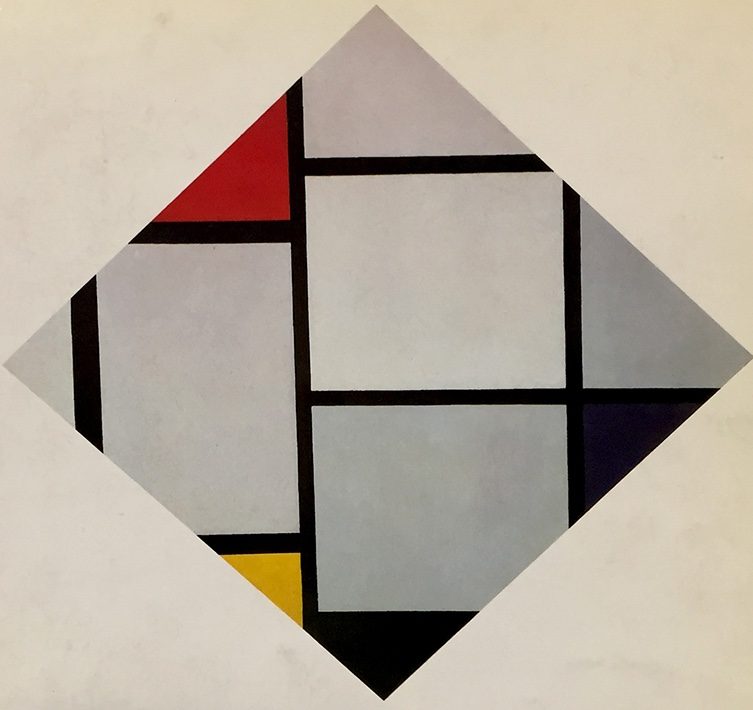
Apology | Mary Szybist

I didn’t mean to say so much to you.
I should have thought to let the evening end
by looking at the stars subdued

into their antique blue and alabaster hues.
Such looking would have fit with my intent.
I didn’t mean to speak that way to you.

If I could take it back, I’d take it, undo
it, and replace it with the things I meant
to give—not what I let slip (it’s true)

like any pristine star of ornamental hue.
I do not always do what I intend.
I didn’t mean to say so much to you.

It slipped before I saw, before I knew.
Or do we always do what we intend?
Perhaps it’s true and all along I knew

what I was saying—but how I wanted you.
I should have thought to let the evening end.
The placid stars seemed filled and then subdued
by what I did and did not want to do.

The City

You said: “I’ll go to another country, go to another shore,
find another city better than this one.
Whatever I try to do is fated to turn out wrong
and my heart lies buried like something dead.
How long can I let my mind moulder in this place?
Wherever I turn, wherever I look,
I see the black ruins of my life, here,
where I’ve spent so many years, wasted them, destroyed them totally.”

You won’t find a new country, won’t find another shore.
This city will always pursue you.
You’ll walk the same streets, grow old
in the same neighborhoods, turn gray in these same houses.
You’ll always end up in this city. Don’t hope for things elsewhere:
there’s no ship for you, there’s no road.
Now that you’ve wasted your life here, in this small corner,
you’ve destroyed it everywhere in the world.

– TRANSLATED BY EDMUND KEELEY

C. P. Cavafy, “The City” from C.P. Cavafy: Collected Poems. Translated by Edmund Keeley and Philip Sherrard. Translation Copyright © 1975, 1992 by Edmund Keeley and Philip Sherrard. Reproduced with permission of Princeton University Press

Source: C.P. Cavafy: Collected Poems (Princeton University Press, 1975)

Ghazal | Royal | Carol Stone

We are one of those long-married couples who do not speak.
Especially after our argument on the train to Brighton, we do not speak.

For the life of me, I can’t read a timetable, while my husband can.
Around us, elderly couples lift pasty faces to sun, and do not speak.

I order Earl Grey with milk and sugar, and crème-filled biscuits.
Reclining on green and white-striped lawn chairs, we still do not speak.

We visit the Royal Palace where King George IV summered.
I wonder if, like exhausted marrieds, kings and queens do not speak.

Among regal objets d’art, were they ever pierced through the heart?
Or suffer emotional pains about which the English do not speak?

I, Carole, an American, understand little of royal restraint.
I am myself a ruined soul, with wild fantasies I do not speak

Ashes of Life | Edna St. Vincent Millay

Love has gone and left me, and the days are all alike.
Eat I must, and sleep I will—and would that night were here!
But ah, to lie awake and hear the slow hours strike!
Would that it were day again, with twilight near!

Love has gone and left me, and I don’t know what to do;
This or that or what you will is all the same to me;
But all the things that I begin I leave before I’m through—
There’s little use in anything as far as I can see.

Love has gone and left me, and the neighbors knock and borrow,
And life goes on forever like the gnawing of a mouse.
And to-morrow and to-morrow and to-morrow and to-morrow
There’s this little street and this little house.

I know I am but summer to your heart | Edna St. Vincent Millay

I know I am but summer to your heart,
And not the full four seasons of the year;
And you must welcome from another part
Such noble moods as are not mine, my dear.
No gracious weight of golden fruits to sell
Have I, nor any wise and wintry thing;
And I have loved you all too long and well
To carry still the high sweet breast of Spring.
Wherefore I say: O love, as summer goes,
I must be gone, steal forth with silent drums,
That you may hail anew the bird and rose
When I come back to you, as summer comes.
Else will you seek, at some not distant time,
Even your summer in another clime.

Sorrow | Edna St. Vincent Millay

Sorrow like a ceaseless rain
Beats upon my heart.
People twist and scream in pain, —
Dawn will find them still again;
This has neither wax nor wane,
Neither stop nor start.
People dress and go to town;
I sit in my chair.
All my thoughts are slow and brown:
Standing up or sitting down
Little matters, or what gown
Or what shoes I wear.

I, being born a woman and distressed | Edna St. Vincent Millay

I, being born a woman and distressed
By all the needs and notions of my kind,
Am urged by your propinquity to find
Your person fair, and feel a certain zest
To bear your body’s weight upon my breast:
So subtly is the fume of life designed,
To clarify the pulse and cloud the mind,
And leave me once again undone, possessed.
Think not for this, however, the poor treason
Of my stout blood against my staggering brain,
I shall remember you with love, or season
My scorn with pity,—let me make it plain:
I find this frenzy insufficient reason
For conversation when we meet again.

Sonnet XXX: Love is Not All | Edna St. Vincent Millay

Love is not all: it is not meat nor drink
Nor slumber nor a roof against the rain;
Nor yet a floating spar to men that sink
And rise and sink and rise and sink again;
Love can not fill the thickened lung with breath,
Nor clean the blood, nor set the fractured bone;
Yet many a man is making friends with death
Even as I speak, for lack of love alone.
It well may be that in a difficult hour,
Pinned down by pain and moaning for release,
Or nagged by want past resolution’s power,
I might be driven to sell your love for peace,
Or trade the memory of this night for food.
It well may be. I do not think I would.

Sonnet V: If I should learn in some quite casual way | Edna St. Vincent Millay

IF I should learn, in some quite casual way,
That you were gone, not to return again—
Read from the back-page of a paper, say,
Held by a neighbor in a subway train,
How at the corner of this avenue
And such a street (so are the papers filled)
A hurrying man—who happened to be you—
At noon to-day had happened to be killed,
I should not cry aloud—I could not cry
Aloud, or wring my hands in such a place—
I should but watch the station lights rush by
With a more careful interest on my face,
Or raise my eyes and read with greater care
Where to store furs and how to treat the hair.