ai habib-e-ambar-dast! | Faiz Ahmad Faiz | Fragrant Hands | Agha Shahid Ali

ek ajnabii KHaatuun ke naam KHushbuu kaa tohfa vasuul hone par

kisī ke dast-e-ināyat ne kunj-e-zindāñ meñ
kiyā hai aaj ajab dil-navāz band-o-bast
mahak rahī hai fazā zulf-e-yār kī sūrat
havā hai garmī-e-ḳhushbū se is tarah sarmast
abhī abhī koī guzrā hai gul-badan goyā
kahīñ qarīb se, gesū-ba-dosh, ġhuncha-ba-dast
liye hai bū-e-rifāqat agar havā-e-chaman
to laakh pahre biThā.eñ qafas pe zulm-parast
hamesha sabz rahegī vo shāḳh-e-mehr-o-vafā
ki jis ke saath bañdhī hai diloñ kī fat.h o shikast

ye sher-e-hāfiz-e-shīrāz, ai sabā! kahnā
mile jo tujh se kahīñ vo habīb-e-ambar-dast
”ḳhalal-pazīr buad har binā ki mai-bīnī
ba-juz binā-e-mohabbat ki ḳhālī az-ḳhalal-ast”

किसी के दस्त-ए-इनायत ने कुंज-ए-ज़िंदाँ में
किया है आज अजब दिल-नवाज़ बंद-ओ-बस्त
महक रही है फ़ज़ा ज़ुल्फ़-ए-यार की सूरत
हवा है गर्मी-ए-ख़ुशबू से इस तरह सरमस्त
अभी अभी कोई गुज़रा है गुल-बदन गोया
कहीं क़रीब से, गेसू-ब-दोश, ग़ुंचा-ब-दस्त
लिए है बू-ए-रिफ़ाक़त अगर हवा-ए-चमन
तो लाख पहरे बिठाएँ क़फ़स पे ज़ुल्म-परस्त
हमेशा सब्ज़ रहेगी वो शाख़-ए-मेहर-अो-वफ़ा
कि जिस के साथ बंधी है दिलों की फ़तह ओ शिकस्त

ये शेर-ए-हाफ़िज़-ए-शीराज़, ऐ सबा! कहना
मिले जो तुझ से कहीं वो हबीब-ए-अम्बर-दस्त
”ख़लल-पज़ीर बुअद हर बिना कि मय-बीनी
ब-जुज़ बिना-ए-मोहब्बत कि ख़ाली अज़-ख़लल-अस्त”

کسی کے دست عنایت نے کنج زنداں میں
کیا ہے آج عجب دل نواز بند و بست
مہک رہی ہے فضا زلف یار کی صورت
ہوا ہے گرمئ خوشبو سے اس طرح سرمست
ابھی ابھی کوئی گزرا ہے گل بدن گویا
کہیں قریب سے ،گیسو بدوش ،غنچہ بدست
لیے ہے بوئے رفاقت اگر ہوائے چمن
تو لاکھ پہرے بٹھائیں قفس پہ ظلم پرست
ہمیشہ سبز رہے گی وہ شاخ مہر و وفا
کہ جس کے ساتھ بندھی ہے دلوں کی فتح و شکست

یہ شعر حافظ شیراز، اے صبا! کہنا
ملے جو تجھ سے کہیں وہ حبیب عنبر دست
”خلل پذیر بود ہر بنا کہ مے بینی
بجز بنائے محبت کہ خالی از خلل است”

– Faiz Ahmad Faiz,
Central Jail, Hyderabad
28, 29 April, 1953

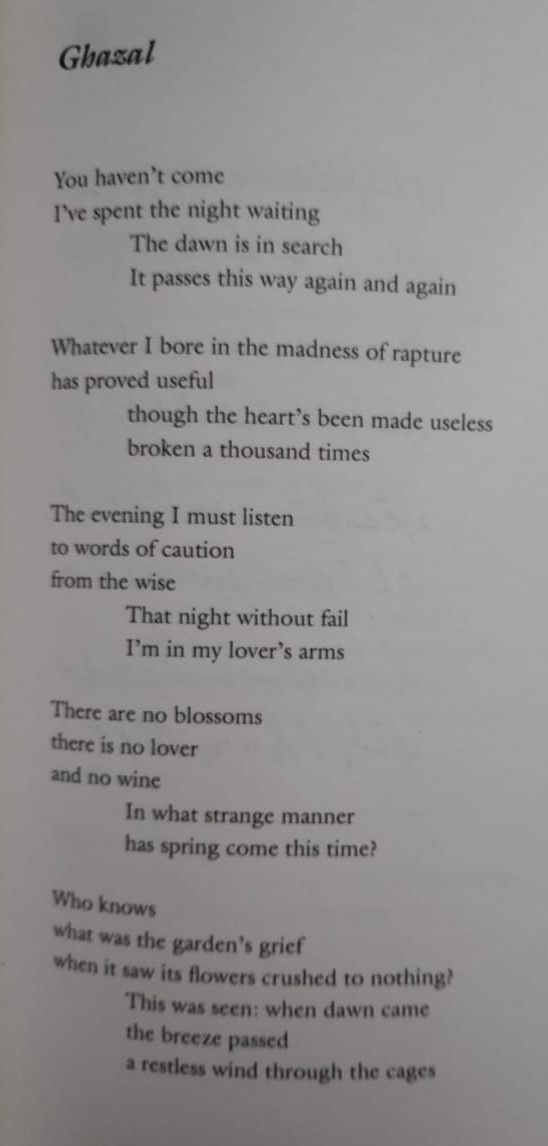
This appears in Agha Shahid Ali’s Rebel’s Silhouette as

Fragrant Hands 
(For the unknown woman who sent me a bouquet of flowers in prison)

A strange arrangement to comfort the heart-
someone has made that possible
in a corner of the cell
with giving generous hands,

and the air is now so softened,
I compare it with the beloved’s hair,
the air is so drowned,
I think a body, wearing a jewellry of blossoms,
has just passed this way.

And as the air holds itself together,
a bouquet of compassion,
I can say:

Let thousands of watches be set on cages
by those who worship cruelty,
fidelity will always be in bloom –
this fidelity on which are grafted
the defeats and triumphs of the heart.

Should you, Oh air, ever come across her,
my friend of fragrant hands, recite this from Hafiz of Shiraz to her:
“Nothing in this world is without terrible barriers –
Except love, but only when it begins.

Agha Shahid Ali also uses the Hafiz verse in one of his own poems: By the Waters of the Sind

Google Translate renders these lines as:
“Every building you see was disruptive
Except for love, it is free from defects.
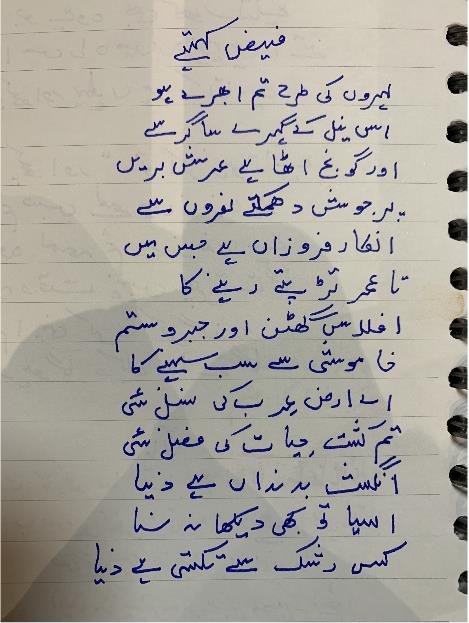
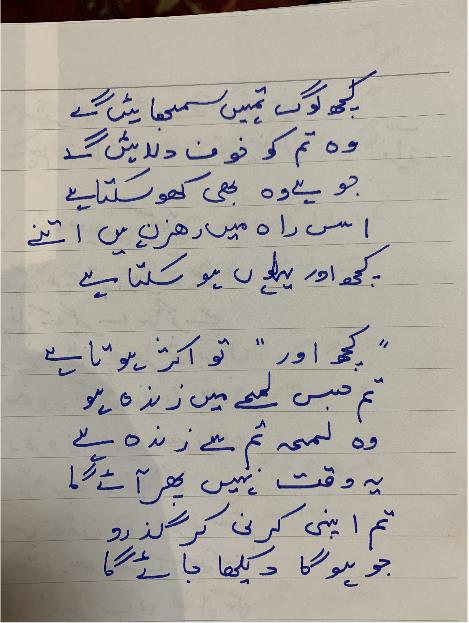
Faiz Kahte | Faiz would have said | Fahmida Riaz (recited by Dr Azra Raza)

lahron kii tarah tum ubhre ho
is niil ke gahre saagar se
aur guuNj uThaa hai arsh-e-bariiN*
purjosh** dhamakte naaroN se
inkaar farozaaN# hai jis meN
taa-umr taRapte rahne kaa
iflaas$, ghuTan aur jabr-o-sitam^
khaamoshi se sab sahne kaa
ae arz-e-arab& kii nasal naii
tum kisht-e-hayaat@ kii fasl naii
angusht badaNdaa hai duniya
aisaa to kahii dekhaa naa sunaa
kis rashk se taktii hai duniyaa

kuchh log tumheN samjhaayeNge
vo tum ko khaauf dilaayeNge
jo hai vo bhii kho saktaa hai
is raah meN rahzan haiN itne
kuchh aur yahaaN ho saktaa hai
kuchh aur to aksar hotaa hai
tum jis lamhe meN ziNdaa ho
vo lamhaa tum se ziNdaa hai
ye waqt nahii phir aayegaa
tum apnii karnii kar guzro
jo hogaa dekhaa jaayegaa

फ़ैज़ कहते
फ़हमीदा रिआज़

लेहरों की तरह तुम उभरे हो
इस नील के गहरे सागर से
और गूँज उठा है अर्श-ए-बरीं*
पुरजोश** धमकते नारों से
इनकार फ़रोज़ाँ# है जिस में
ता-उम्र तड़पते रहने का
इफ्लास$, घुटन और जब्र-ओ-सितम^
ख़ामोशी से सब सहने का
ऐ अरज़-ए-अरब& की नस्ल नई
तुम किश्त-ए-हयात@ की फ़स्ल नई
अंगुश्त बदंदां है दुन्या
ऐसा तो कभी देखा न सुना
किस रश्क से तकती है दुन्या

कुछ लोग तुम्हें समझाएं गे
वो तुमको ख़ौफ़ दिलाएं गे
जो है वो भी खो सकता है
इस राह में रहज़न हैं इतने
कुछ और यहाँ हो सकता है
कुछ और तो अक्सर होता है
तुम जिस लम्हे में ज़िंदा हो
वो लम्हा तुम से ज़िंदा है
ये वक़्त नहीं फिर आए गा
तुम अपनी करनी कर गुज़रो
जो होगा देखा जाए गा

*arsh-e-barii.n
अर्श-ए-बरींعرش بریں
highest sky/ throne of God
सबसे ऊँचा आसमान, नभ मण्डल,

**pur-josh
पुर-जोशپرجوش
Ardent, Lively, Wholehearted, Zealous
फा. वि. जोशीला, जोश से भरा हुआ, आवेगपूर्ण, ज़ोरदार, उत्साहपूर्ण, उमंग से भरा हुआ।

#farozaa.n
फ़रोज़ाँفروزاں
shining, luminous, resplendent

iflaas
इफ़्लासافلاس
poverty

^jabr-o-sitam
जब्र-ओ-सितमجبر و ستم
constraint and tyranny

&arz-e-arab
अर्ज़-ए-अरबارض عرب
Land of Arab

@kisht-e-hayaat
किश्त-ए-हयातکشت حیات
seeds sown, a sown field in life

“Angusht ba-dandaan”,
literally, “fingers between the teeth”.

I was quite puzzled by this as I could not find its meaning anywhere. I was happy to find Angushta in Platts but could not figure out what this “dandaan” was, till a friend helped, and finally the penny dropped” plural for daaNd, for teeth, as in Punjabi.

Norrnally, in Urdu and Hindi, one would expect to hear daaNt or daaNtoN – but daNdaan is so good, and so Punjabi!
As my friend Ajmal Kamal explained “This is one of the many common words between Persian and Punjabi. Persian, Punjabi and Dakkani have the same way of making plurals.”

***
There is a bit of history to this video – of this beautiful recitation by Dr Azra Raza. I came across a short video of her reciting this – which, as it turned out, were the concluding bits taken from her talk “Shahi and Faqeeri: Lahore at its best” at NYU Urdu Conference 2018 – and could not find the full Fahmida Riaz nazm anywhere in any of her published writings. 

I had of course known the original Faiz Ahmed Faiz poem that she had adapted as a tribute:

ab kyun us din kaa zikr karo
jab dil TukDe ho jaaega
aur saare gham miT jaaenge
jo kuchh paayaa kho jaaega
jo mil na saka wo paenge
ye din to wahii pahlaa din hai
jo pahlaa din thaa chaahat kaa
hum jis ki tamanna karte rahe
aur jis se har dam Darte rahe
ye din to kaii baar aaya
sau baar base aur ujaD gae
sau baar luTe aur bhar paayaa

ab kyuun us din kaa zikr karo
jab dil TukDe ho jaaega
aur saare gham miT jaaenge
tum KHauf-o-KHatar se dar-guzro
jo honaa hai so honaa hai
gar hasnaa hai to hasnaa hai
gar ronaa hai to ronaa hai
tum apnii karnii kar guzro
jo hogaa dekhaa jaegaa


Finally, it took an email to Dr Raza to get the full nazm. As Dr Raza explained, Fahmida Riaz wrote it for Arab Spring. But the lines she quoted of course speak for all times.

Apparently it was recited by her at a mushaairaa some years back at Asia Society in NY.

Mere hamdam, mere dost | Faiz Ahmed Faiz

gar mujhe is kā yaqīñ ho mire hamdam mire dost
gar mujhe is kā yaqīñ ho ki tire dil kī thakan
tirī āñkhoñ kī udāsī tere siine kī jalan
merī dil-jūī mire pyaar se miT jā.egī
gar mirā harf-e-tasallī vo davā ho jis se
jī uThe phir tirā ujḌā huā be-nūr dimāġh
terī peshānī se Dhal jaa.eñ ye tazlīl ke daaġh
terī bīmār javānī ko shifā ho jaa.e
gar mujhe is kā yaqīñ ho mire hamdam mare dost
roz o shab shaam o sahar maiñ tujhe bahlātā rahūñ
maiñ tujhe giit sunātā rahūñ halke shīrīñ
ābshāroñ ke bahāroñ ke chaman-zāroñ ke giit
āmad-e-sub.h ke, mahtāb ke, sayyāroñ ke giit
tujh se maiñ husn-o-mohabbat kī hikāyāt kahūñ
kaise maġhrūr hasīnāoñ ke barfāb se jism
garm hāthoñ kī harārat meñ pighal jaate haiñ
kaise ik chehre ke Thahre hue mānūs nuqūsh
dekhte dekhte yak-laḳht badal jaate haiñ
kis tarah āriz-e-mahbūb kā shaffāf bilor
yak-ba-yak bāda-e-ahmar se dahak jaatā hai
kaise gulchīñ ke liye jhuktī hai ḳhud shāḳh-e-gulāb
kis tarah raat kā aivān mahak jaatā hai
yūñhī gaatā rahūñ gaatā rahūñ terī ḳhātir
giit buntā rahūñ baiThā rahūñ terī ḳhātir
par mire giit tire dukh kā mudāvā hī nahīñ
naġhma jarrāh nahīñ mūnis-o-ġham ḳhvār sahī
giit nashtar to nahīñ marham-e-āzār sahī
tere āzār kā chāra nahīñ nashtar ke sivā
aur ye saffāk masīhā mire qabze meñ nahīñ
is jahāñ ke kisī zī-rūh ke qabze meñ nahīñ
haañ magar tere sivā tere sivā tere sivā

– Faiz Ahmed Faiz

If I were certain of this, my companion, my friend,
If I were certain of this, that the weariness of your heart,
The sadness of your eyes, the burning in your breast,
Would be removed by my sympathy, my affection;
If my words of consolation were that medicine through which
Your desolated, ‘unlit brain would recover itself,
These stains of humiliation be removed from your forehead,
Your sickly youth be cured; –
If I were certain of this, my companion , my friend,
Day and night, evening and daybreak, I would keep entertaining
you. ,
I would keep singing you songs: gentle and sweet,
Songs of waterfalls, of springtimes, of meadows,
Songs of the advent of dawn, of moonlight, of planets;
I would tell you stories of beauty and love,
Of how the ice-like bodies of proud beauties
Melt in the ardour of warm hands;
How the well-known, familiar features of some face
While we are watching all at once become changed,’
How the transparent crystal of the beloved’s cheek
Suddenly glows with red wine;
How the rose-spray bends of itself for the rose-plucker,
How the hall of night grows perfumed;
-So would I k’eep singing, keep singing, for your sake,
I would go on sitting and weaving songs for your sake.
But my songs are no remedy for your affliction,
Melody is no surgeon, even though consoling and sympathetic,·
A song is no lancet, though it may be a lotion for sickness.
There is no cure for your sickness, except the lancet,
And this butcher-messiah is not in my power,
Is not in the power of any breathing thing in this world,
Except-yes! except yourself, except yourself, except yourself.

Translated by VG Kiernan, Poems by Faiz


tum mere paas raho

tum mire paas raho
mire qātil, mire dildār mire paas raho
jis ghaḌī raat chale,
āsmānoñ kā lahū pī ke siyah raat chale
marham-e-mushk liye, nashtar-e-almās liye
bain kartī huī hañstī huī gaatī nikle
dard ke kāsnī pāzeb bajātī nikle
jis ghaḌī sīnoñ meñ Duube hue dil
āstīnoñ meñ nihāñ hāthoñ kī rah takne lage
aas liye
aur bachchoñ ke bilakne kī tarah qulaul-e-mai
bahr-e-nā-sūdgī machle to manā.e na mane
jab koī baat banā.e na bane
jab na koī baat chale
jab ghaḌī raat chale
jis ghaḌī mātamī sunsān siyah raat chale
paas raho
mire qātil, mire dildār mire paas raho

Victor Kiernen

Be near me—  
My torment, my darling, be near me
That hour when the night comes,
Black night that has drunk heaven’s blood comes
With salve of musk-perfume, with diamond-tipped lancet,
With wailing, with jesting, with music,
With grief like a clash of blue anklets—
When, hoping once more, hearts deep-sunk in men's bosoms
Wait, watch for the hands whose wide sleeves still
Enfold them,

Till wine's gurgling sound is a sobbing of infants
Unsatisfied, fretful, no soothing will silence, —
No taking thought prospers,
No thought serves;
— That hour when the night comes,
That hour when black night, drear, forlorn, comes
Be near me.
My torment, my darling, be near me!
You be near me,  
My destroyer , my sweetheart, be near me —
At the hour when night comes,
When dark night having drunk the blood of the heavens comes
Bearing the salve of musk, bearing the lancet of diamond , Comes out making lamentation, laughing, singing,
Comes out sounding blue-grey anklets of pain;
At the hour when hearts sunk in breasts
Have begun to watch out for hands hidden in sleeves,
With hope,
And gurgling of wine, like a sobbing of children,
Because of frustration is fractious,
and though you may soothe it will not be soothed:
When whatever thing you try to bring about will not be
brought about.
When nothing succeeds:
At the hour when night comes,
At the hour when mournful, dreary, black night comes
Be near.
My destroyer, my sweetheart, be near me.

mauzu-e-suKHan (gul huii jaati hai)

gul huī jaatī hai afsurda sulagtī huī shaam
Evening , numb and smouldering, is being extinguished,
Dhul ke niklegī abhī chashma-e-mahtāb se raat
Soon night will emerge, bathed, from the fountain of the moon,
aur mushtāq nigāhoñ kī sunī jā.egī
And the eyes’ desire will be fulfilled,
aur un hāthoñ se mas hoñge ye tarse hue haat
And these thirsting hands will touch those hands!
un kā āñchal hai ki ruḳhsār ki pairāhan hai
Is it the border of her veil, or cheek, or is it her mantle?
kuchh to hai jis se huī jaatī hai chilman rañgīñ
Something there is by which the curtain is being tinged with colour.
jaane us zulf kī mauhūm ghanī chhāñv meñ
There is no knowing whether in the hazy thick shade of that tress
TimTimātā hai vo āveza abhī tak ki nahīñ
That earring is still twinkling or not.
aaj phir husn-e-dil-ārā kī vahī dhaj hogī
Today again there will be the same style of captivating beauty,
vahī ḳhvābīda sī āñkheñ vahī kājal kī lakīr
Those same as-if-sleeping eye, that line of lampblack
rañg-e-rukHsār pe halkā sā vo ġhāze kā ġhubār
On the colour of the cheek that faint cloud of powder,
sandalī haath pe dhuñdlī sī hinā kī tahrīr
On the sandalwood-coloured hand the misty tracery of henna.
apne afkār kī ash.ār kī duniyā hai yahī
This only is the world of my thoughts, my verses,
jān-e-mazmūñ hai yahī shāhid-e-ma.anī hai yahī
This only is the soul of my meaning, this only is the darling of my intent.

aaj tak surḳh o siyah sadiyoñ ke saa.e ke tale
Down to today, under the shadow of red and black centuries,
aadam o havvā kī aulād pe kyā guzrī hai?
What has befallen the offspring of Adam and Eve?
maut aur ziist kī rozāna saf-ārā.ī meñ
In the daily battle-array of death and life,
ham pe kyā guzregī ajdād pe kyā guzrī hai?
What will befall us, what has befallen our ancestors?
in damakte hue shahroñ kī farāvāñ maḳhlūq
The multitudinous creatures of these glittering cities,
kyuuñ faqat marne kī hasrat meñ jiyā kartī hai
Why do they keep living only in desire of death?
ye hasīñ khet phaTā paḌtā hai jauban jin kaa!
These lovely fields, whose bloom is bursting out,
kis liye in meñ faqat bhuuk ugā kartī hai
Why does only hunger keep growing in them?

ye har ik samt pur-asrār kaḌī dīvāreñ
These harsh walls on every side, full of mysteries,
jal-bujhe jin meñ hazāroñ kī javānī ke charāġh
In which the lamps of the youth of thousands have burned away,
ye har ik gaam pe un ḳhvāboñ kī maqtal-gāheñ
These execution-grounds, at every step , of those dreams
jin ke partav se charāġhāñ haiñ hazāroñ ke dimāġh
By whose radiance the minds of thousands are lamps
ye bhī haiñ aise ka.ī aur bhī mazmūñ hoñge
These also are themes , others also like them there may be.
lekin us shoḳh ke āhista se khulte hue hoñT
But the slowly opening lips of that saucy one!
haa.e us jism ke kambaḳht dil-āvez ḳhutūt
Ah, the cursed alluring lines of that body!

aap hī kahiye kahīñ aise bhī afsūñ hoñge
You yourself say, will there be such sorceries anywhere else?
apnā mauzu-e-suḳhan un ke sivā aur nahīñ
My theme of poetry is nothing else except these,
tab.a-e-shā.er kā vatan un ke sivā aur nahīñ
The native land of the poet’s nature is nothing else except these.

Literal translation above is by Victor Kiernen, as is the poetic one below.

Victor Kiernen

Twilight is burning out and turning chill,
Night comes fresh-bathed from where the moon’s spring flows;
And now—these eager eyes shall have their will,
These avid fingers feel the touch of those!
Is that her fringed veil, is it her face, her dress,
Behind the hanging gauze, that makes it glow—
And in the vague mist of that rippling tress
Does the bright earring twinkle still, or no?
Subtly once more her loveliness will speak,
Those pencilled lids, those languorous eyes, again;
Dusted with that faint powder, her pink cheek,
On her pale hand the henna’s delicate stain.
Here is the chosen world of rhyme and dream
My muse inhabits, here her darling theme!
—Under the black and blood-red murk of ages
How has it fared with Eve’s sons all these years?
How shall we fare, where daily combat rages
Of death with life? how fared our forefathers?
Why must those gay streets’ swarming progeny
So draw breath that to die is all they crave?
In those rich fields bursting with bounty, why
Must no ripe harvest except hunger wave?
Walls dark with secrets frown on every side,
That countless lamps of youth have sunk behind;
Everywhere scaffolds on which dreams have died
That lit unnumbered candles in man’s mind.
—These too are subjects; more there are;—but oh,
Those limbs that curve so fatally ravishingly!
Oh that sweet wretch, those lips parting so slow—
Tell me where else such witchery could be!
No other theme will ever fit my rhyme;
Nowhere but here is poetry’s native clime.


tum aaye ho naa

tum aa.e ho na shab-e-intizār guzrī hai
talāsh meñ hai sahar baar baar guzrī hai

junūñ meñ jitnī bhī guzrī ba-kār guzrī hai
agarche dil pe ḳharābī hazār guzrī hai

huī hai hazrat-e-nāseh se guftugū jis shab
vo shab zarūr sar-e-kū-e-yār guzrī hai

vo baat saare fasāne meñ jis kā zikr na thā
vo baat un ko bahut nā-gavār guzrī hai

na gul khile haiñ na un se mile na mai pī hai
ajiib rañg meñ ab ke bahār guzrī hai

chaman pe ġhārat-e-gul-chīñ se jaane kyā guzrī
qafas se aaj sabā be-qarār guzrī hai

Agha Shahid Ali:

shaam-e-firaaq

shām-e-firāq ab na pūchh aa.ī aur aa ke Tal ga.ī
dil thā ki phir bahal gayā jaañ thī ki phir sambhal ga.ī

bazm-e-ḳhayāl meñ tire husn kī sham.a jal ga.ī
dard kā chāñd bujh gayā hijr kī raat Dhal ga.ī

jab tujhe yaad kar liyā sub.h mahak mahak uThī
jab tirā ġham jagā liyā raat machal machal ga.ī

dil se to har mo.āmla kar ke chale the saaf ham
kahne meñ un ke sāmne baat badal badal ga.ī

āḳhir-e-shab ke ham-safar ‘faiz’ na jaane kyā hue
rah ga.ī kis jagah sabā sub.h kidhar nikal ga.ī

Agha Shahid Ali:

Ask no more about separation
somehow I lived through its night
The heart learned to console itself
life returned to its routines. 

*In the festival of memory
you again were loveliness
lit up by beauty
the grief of the moon was extinguished
we were again together in the night. 

*When I remember you
the morning is essence it is perfume it’s musk
And the night
when I kindle our sorrow
is longing caught in itself

*The heart as such 
has settled its every doubt
when I went to tell her we must part*
but on seeing her
the lips spoke love’s unrehearsed words
and everything changed everything changed

It was the final night Faiz
what happened to those who’d started out with you?
When did the morning breeze abandon you
and where on those last miles
the dawn? 

kab yaad mein tera saath nahin

kab yaad meñ terā saath nahīñ kab haat meñ terā haat nahīñ
sad-shukr ki apnī rātoñ meñ ab hijr kī koī raat nahīñ

mushkil haiñ agar hālāt vahāñ dil bech aa.eñ jaañ de aa.eñ
dil vaalo kūcha-e-jānāñ meñ kyā aise bhī hālāt nahīñ

jis dhaj se koī maqtal meñ gayā vo shaan salāmat rahtī hai
ye jaan to aanī jaanī hai is jaañ kī to koī baat nahīñ

maidān-e-vafā darbār nahīñ yaañ nām-o-nasab kī pūchh kahāñ
āshiq to kisī kā naam nahīñ kuchh ishq kisī kī zaat nahīñ

gar baazī ishq kī baazī hai jo chāho lagā do Dar kaisā
gar jiit ga.e to kyā kahnā haare bhī to baazī maat nahīñ

mere dil mere musafir

1978. Bhutto has been ousted. Zia-ul-Haq has taken over. Faiz is in exile again. And there is a Ghalib sh’r too, towards the end:

kahūñ kis se maiñ kih kyā hai shab-e ġham burī balā hai 
mujhe kyā burā thā marnā agar ek bār hotā

mire dil, mire musāfir
huā phir se hukm sādir
ki vatan-badar hoñ ham tum
deñ galī galī sadā.eñ
kareñ ruḳh nagar nagar, kā
ki surāġh koī paa.eñ
kisī yār-e-nāma-bar kā
har ik ajnabī se pūchheñ
jo patā thā apne ghar kā
sar-e-kū-e-nā-shanāyāñ
hameñ din se raat karnā
kabhī is se baat karnā
kabhī us se baat karnā
tumheñ kyā kahūñ ki kyā hai
shab-e-ġham burī balā hai
hameñ ye bhī thā ġhanīmat
jo koī shumār hotā
hameñ kyā burā thā marnā
agar ek baar hotā

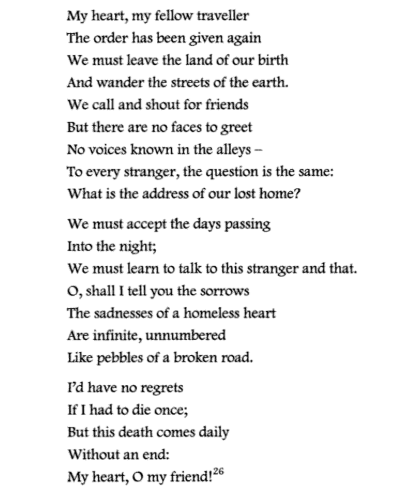
My heart, my fellow traveller
It has been decreed again
That you and I be exiled, 
go calling out in every street, 
turn to every town.
To search for a clue
of a messenger from our Beloved.
To ask every stranger
the way back to our home.

In this town of unfamiliar folk
we drudge the day into the night
Talk to this stranger at times, 
to that one at others.

How can I convey to you, my friend
how horrible is a night of lonliness *
It would suffice to me
if there were just some count
I would gladly welcome death
if it were to come but once.

Satendra Nandan.