Faiz Kahte | Faiz would have said | Fahmida Riaz (recited by Dr Azra Raza)

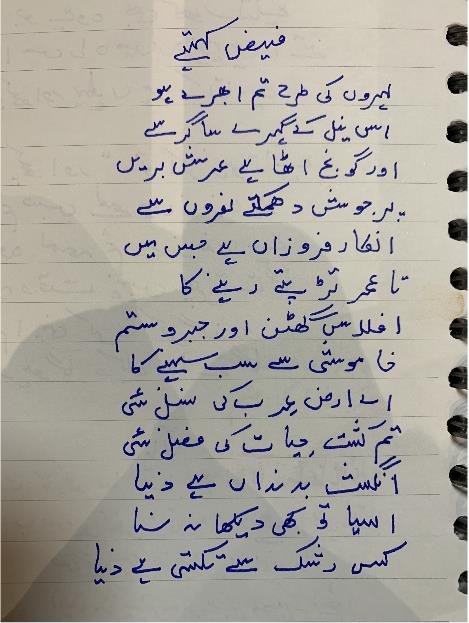
lahron kii tarah tum ubhre ho
is niil ke gahre saagar se
aur guuNj uThaa hai arsh-e-bariiN*
purjosh** dhamakte naaroN se
inkaar farozaaN# hai jis meN
taa-umr taRapte rahne kaa
iflaas$, ghuTan aur jabr-o-sitam^
khaamoshi se sab sahne kaa
ae arz-e-arab& kii nasal naii
tum kisht-e-hayaat@ kii fasl naii
angusht badaNdaa hai duniya
aisaa to kahii dekhaa naa sunaa
kis rashk se taktii hai duniyaa

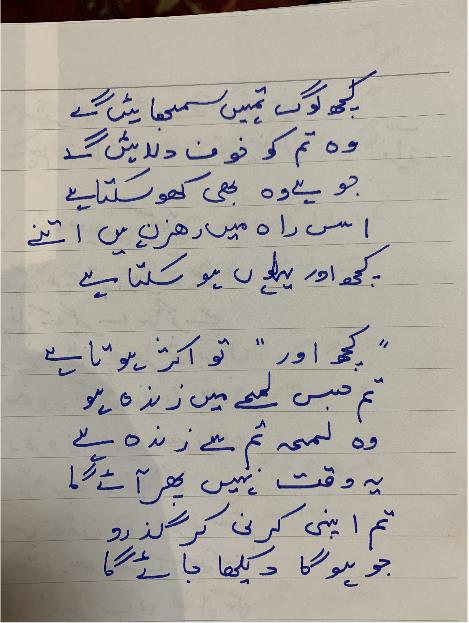
kuchh log tumheN samjhaayeNge
vo tum ko khaauf dilaayeNge
jo hai vo bhii kho saktaa hai
is raah meN rahzan haiN itne
kuchh aur yahaaN ho saktaa hai
kuchh aur to aksar hotaa hai
tum jis lamhe meN ziNdaa ho
vo lamhaa tum se ziNdaa hai
ye waqt nahii phir aayegaa
tum apnii karnii kar guzro
jo hogaa dekhaa jaayegaa

फ़ैज़ कहते
फ़हमीदा रिआज़

लेहरों की तरह तुम उभरे हो
इस नील के गहरे सागर से
और गूँज उठा है अर्श-ए-बरीं*
पुरजोश** धमकते नारों से
इनकार फ़रोज़ाँ# है जिस में
ता-उम्र तड़पते रहने का
इफ्लास$, घुटन और जब्र-ओ-सितम^
ख़ामोशी से सब सहने का
ऐ अरज़-ए-अरब& की नस्ल नई
तुम किश्त-ए-हयात@ की फ़स्ल नई
अंगुश्त बदंदां है दुन्या
ऐसा तो कभी देखा न सुना
किस रश्क से तकती है दुन्या

कुछ लोग तुम्हें समझाएं गे
वो तुमको ख़ौफ़ दिलाएं गे
जो है वो भी खो सकता है
इस राह में रहज़न हैं इतने
कुछ और यहाँ हो सकता है
कुछ और तो अक्सर होता है
तुम जिस लम्हे में ज़िंदा हो
वो लम्हा तुम से ज़िंदा है
ये वक़्त नहीं फिर आए गा
तुम अपनी करनी कर गुज़रो
जो होगा देखा जाए गा

*arsh-e-barii.n
अर्श-ए-बरींعرش بریں
highest sky/ throne of God
सबसे ऊँचा आसमान, नभ मण्डल,

**pur-josh
पुर-जोशپرجوش
Ardent, Lively, Wholehearted, Zealous
फा. वि. जोशीला, जोश से भरा हुआ, आवेगपूर्ण, ज़ोरदार, उत्साहपूर्ण, उमंग से भरा हुआ।

#farozaa.n
फ़रोज़ाँفروزاں
shining, luminous, resplendent

iflaas
इफ़्लासافلاس
poverty

^jabr-o-sitam
जब्र-ओ-सितमجبر و ستم
constraint and tyranny

&arz-e-arab
अर्ज़-ए-अरबارض عرب
Land of Arab

@kisht-e-hayaat
किश्त-ए-हयातکشت حیات
seeds sown, a sown field in life

“Angusht ba-dandaan”,
literally, “fingers between the teeth”.

I was quite puzzled by this as I could not find its meaning anywhere. I was happy to find Angushta in Platts but could not figure out what this “dandaan” was, till a friend helped, and finally the penny dropped” plural for daaNd, for teeth, as in Punjabi.

Norrnally, in Urdu and Hindi, one would expect to hear daaNt or daaNtoN – but daNdaan is so good, and so Punjabi!
As my friend Ajmal Kamal explained “This is one of the many common words between Persian and Punjabi. Persian, Punjabi and Dakkani have the same way of making plurals.”

***
There is a bit of history to this video – of this beautiful recitation by Dr Azra Raza. I came across a short video of her reciting this – which, as it turned out, were the concluding bits taken from her talk “Shahi and Faqeeri: Lahore at its best” at NYU Urdu Conference 2018 – and could not find the full Fahmida Riaz nazm anywhere in any of her published writings. 

I had of course known the original Faiz Ahmed Faiz poem that she had adapted as a tribute:

ab kyun us din kaa zikr karo
jab dil TukDe ho jaaega
aur saare gham miT jaaenge
jo kuchh paayaa kho jaaega
jo mil na saka wo paenge
ye din to wahii pahlaa din hai
jo pahlaa din thaa chaahat kaa
hum jis ki tamanna karte rahe
aur jis se har dam Darte rahe
ye din to kaii baar aaya
sau baar base aur ujaD gae
sau baar luTe aur bhar paayaa

ab kyuun us din kaa zikr karo
jab dil TukDe ho jaaega
aur saare gham miT jaaenge
tum KHauf-o-KHatar se dar-guzro
jo honaa hai so honaa hai
gar hasnaa hai to hasnaa hai
gar ronaa hai to ronaa hai
tum apnii karnii kar guzro
jo hogaa dekhaa jaegaa


Finally, it took an email to Dr Raza to get the full nazm. As Dr Raza explained, Fahmida Riaz wrote it for Arab Spring. But the lines she quoted of course speak for all times.
Apparently it was recited by her at a mushaairaa some years back at Asia Society in NY.

tum bilkul ham jaise nikle

When Fahmida Riaz recited this in JNU in the early 2000, one could perhaps have quibbled that things weren’t as bad as Pakistan in India and that she was perhaps being alarmist, or getting carried away. The last two decades have made her prescient poem more and more relevant for our times.

तुम बिल्कुल हम जैसे निकले | You turned out just like us

तुम बिल्कुल हम जैसे निकले | You turned out just like us
अब तक कहां छुपे थे भाई? | Where were you hiding so far, brother?
वह मूरखता, वह घामड़पन | That stupidity, that arrogance
जिसमें हमने सदी गंवाई | In which we lost a century
आखिर पहुंची द्वार तुम्हारे | Afterall has reached your door
अरे बधाई, बहुत बधाई | O congratulations, many congratulations

भूत धरम का नाच रहा है | The ghost of religion is dancing
कायम हिन्दू राज करोगे? | You will establish a Hindu rule?
सारे उल्टे काज करोगे? | You will do all misdeeds
अपना चमन नाराज करोगे? | You will ravage your own garden?

तुम भी बैठे करोगे सोचा, | You too would sit and ponder
पूरी है वैसी तैयारी, | The preparation seems complete:
कौन है हिन्दू कौन नहीं है | Who is Hindu, who is not
तुम भी करोगे फतवे जारी | You too will issue edicts

वहां भी मुश्किल होगा जीना | There too it will be difficult to live 
दांतो आ जाएगा पसीना | Sweating through your teeth
जैसे-तैसे कटा करेगी | Somehow or other managing to live
वहां भी सबकी सांस घुटेगी | There too everyone would gasp for breath

माथे पर सिंदूर की रेखा | Sindoor on your forehead
कुछ भी नहीं पड़ोस से सीखा! | You learnt just nothing from your neighbourhood
क्या हमने दुर्दशा बनायी | What a mess we made!
कुछ भी तुमको नज़र न आयी? | And yet you saw nothing?

भाड़ में जाये शिक्षा-विक्षा, | Let education-learning go to hell
अब जाहिलपन के गुन गाना, | Now sing songs to barbarous ignorance 
आगे गड्ढा है यह मत देखो | Don’t look at the gaping hole ahead
वापस लाओ गया जमाना | Bring back the bygone time

हम जिन पर रोया करते थे | What would make us cry
तुम ने भी वह बात अब की है | Is what you too have now done 
बहुत मलाल है हमको, लेकिन | We are full of grief, but
हा हा हा हा हो हो ही ही | Ha ha ha ha ho ho hee hee

कल दुख से सोचा करती थी | Yesterday I used to think with sadness
सोच के बहुत हँसी आज आयी | It made me laugh a lot today
तुम बिल्कुल हम जैसे निकले | You turned out just like us

हम दो कौम नहीं थे भाई | We were not two communities, brother
मश्क करो तुम, आ जाएगा | Practice and you will learn it too:

उल्टे पांवों चलते जाना, | Just keep walking backwards
दूजा ध्यान न मन में आए | Don’t allow anohter thought to your mind
बस पीछे ही नज़र जमाना | Just keep your eyes firmly on the past
एक जाप-सा करते जाओ, | And keep chanting 
बारम्बार यह ही दोहराओ | Repeat over and over again
कितना वीर महान था भारत! | How brave and great was India!
कैसा आलीशान था भारत! | How glorious and grand was India!

tum bilkul hum jaisey nikley
ab tak kahaN chhupe the bhai
voh moorkhta, voh ghaamarpan
jis mein hum ne sadi ganwai
aakhir pahunchi dwaar tumhaarey
arre badhai bohot badhaipreyt dharam ka naach rahaa hai
qayam Hindu raaj karoge?
saarey ultey kaaj karogay
apna chaman daraaj karogeytum bhee baithey karogey sochaa
poori hai waisi tayyari
kaun hai Hindu, kaun naheeN hai
tum bhi karogay fatwe jaarihoga kathin yahaN bhi jeena
raatoN aa jayega paseenajaisi taisi kata karegi
yahan bhi sabki saans ghutegi
kal dukh se socha karti thi
soch ke bohot hansi aaj aee,
tum bilkul hum jaise nikleHum do qaum nahin the bhai!bhaar mein jaaye shiksha vikshaab jaahilpan  ke  gun gaana.aage gadha hai yeh mat dekhowapas laao gaya zamana
bhasht karo tum aajayega
ulte paaon chalte jaana
dhyaan na mann mein dooja aaye
bas peeche hi nazar jamanaek jaap saa kartey jao
varam var yahi dohrao
kitna veer mahaan tha Bharat
kaisa alishaan tha bharat
phir tum log pohonch jaogay
bas parlok pohonch jaaogay
hum toh hain pehle se wahan par
tum bhi samay nikalte rehna
ab jis nark mein jaao wahan se
chitthi vitthi daalte rehna