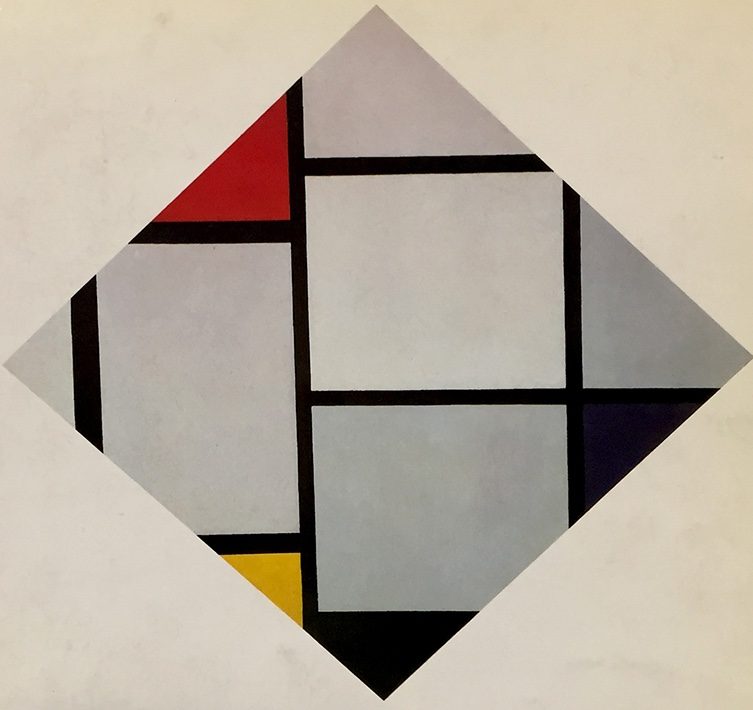
Euclid alone has looked on Beauty bare.
Let all who prate of Beauty hold their peace,
And lay them prone upon the earth and cease
To ponder on themselves, the while they stare
At nothing, intricately drawn nowhere
In shapes of shifting lineage; let geese
Gabble and hiss, but heroes seek release
From dusty bondage into luminous air.
O blinding hour, O holy, terrible day,
When first the shaft into his vision shone
Of light anatomized! Euclid alone
Has looked on Beauty bare. Fortunate they
Who, though once only and then but far away,
Have heard her massive sandal set on stone.
Category: Edna St. Vincent Millay
Sonnet iii | Mindful of you the sodden earth in spring | Edna St. Vincent Millay
Mindful of you the sodden earth in spring,
And all the flowers that in the springtime grow,
And dusty roads, and thistles, and the slow
Rising of the round moon, all throats that sing
The summer through, and each departing wing,
And all the nests that the bared branches show,
And all winds that in any weather blow,
And all the storms that the four seasons bring.
You go no more on your exultant feet
Up paths that only mist and morning knew,
Or watch the wind, or listen to the beat
Of a bird’s wings too high in air to view,—
But you were something more than young and sweet
And fair,—and the long year remembers you.
From Renascence, and other poems (Harper, 1917) by Edna St. Vincent Millay. This poem is in the public domain.
Sonnet clxv | It is fashion now to wave aside | Edna St. Vincent Millay
It is the fashion now to wave aside
As tedious, obvious, vacuous, trivial, trite,
All things which do not tickle, tease, excite
To some subversion, or in verbiage hide
Intent, or mock, or with hot sauce provide
A dish to prick the thickened appetite;
Straightforwardness is wrong, evasion right;
It is correct, de rigueur, to deride.
What fumy wits these modern wags expose,
For all their versatility: Voltaire,
Who wore to bed a night-cap, and would close,
In fear of drafts, all windows, could declare
In antique stuffiness, a phrase that blows
Still through men’s smoky minds, and clears the air.
(Mine the Harvest, 1954)
Sonnet in Dialectic (clxi) | And is indeed truth beauty? | Edna St. Vincent Millay
And is indeed truth beauty?–at the cost
Of all that we cared for, can this be?–
To see the coarse triumphant, and to see
Honour and pity ridiculed, and tossed
Upon a poked-at fire; all courage lost
Save what is whelped and fattened by decree
To move among the unsuspecting free
And trap the thoughtful, with their thoughts engrossed?
Drag yet that stream for Beauty, if you will;
And find her, if you can; finding her drowned
Will not dismay your ethics,–and you will still
To one and all insist she has been found…
And haggard men will smile your praise, until,
Some day, they stumble on her burial mound.
Sonnet cxvi | Well, I have lost you and I lost you fairly | Edna St. Vincent Millay
Well, I have lost you; and I lost you fairly;
In my own way, and with my full consent.
Say what you will, kings in a tumbrel rarely
Went to their deaths more proud than this one went.
Some nights of apprehension and hot weeping
I will confess; but that’s permitted me;
Day dried my eyes; I was not one for keeping
Rubbed in a cage a wing that would be free.
If I had loved you less or played you slyly
I might have held you for a summer more,
But at the cost of words I value highly,
And no such summer as the one before.
Should I outlive this anguish—and men do—
I shall have only good to say of you.
Sonnet cxiv | I know my mind and I have made my choice | Edna St. Vincent Millay
I know my mind and I have made my choice;
Not from your temper does my doom depend;
Love me or love me not, you have no voice
In this, which is my portion to the end.
Your presence and your favours, the full part
That you could give, you now can take away:
What lies between your beauty and my heart
Not even you can trouble or betray.
Mistake me not_unto my inmost core
I do desire your kiss upon my mouth;
They have not craved a cup of water more
That bleach upon the deserts of the south;
Here might you bless me; what you cannot do
Is bow me down, who have been loved by you.
Sonnet cix | You loved me not at all but let it go | Edna St. Vincent Millay
You loved me not at all but let it go;
I loved you more than life, but let it be.
As the more injured party, this being so,
The hour’s amenities are all to me_
The choice of weapons; and I gravely choose
To let the weapons tarnish where they lie;
And spend the night in eloquent abuse
Of senators and popes and such small fry
And meet the morning standing, and at odds
With heaven and earth and hell and any fool
Who calls his soul his own, and all the gods,
And all the children getting dressed for school…
And you will leave me, and I shall entomb
What’s cold by then in an adjoining room.
Sonnet xl | Loving you less than life, a little less | Edna St. Vincent Millay
Loving you less than life, a little less
Than bitter-sweet upon a broken wall
Of brush-wood smoke in autumn, I confess
I cannot swear I love you not at all.
For there is that about you in this light_
A yellow darkness, inister of rain_
Which suddenly recalls my stubborn sight
To dwell on you, and dwell on you again.
And I am made aware of many a week
I shall consume, remembering in what way
Your brown hair grows about your brow and cheek,
And what divine absurdities you say:
Till all the world, and I, and surely you,
Will know I love you, whether or not I do.
Sonnet xxxii | Here is a wound that never will heal | Edna St. Vincent Millay
Here is a wound that never will heal, I know,
Being wrought not of a dearness and a death,
But of a love turned ashes and the breath
Gone out of beauty; never again will grow
The grass on that scarred acre, though I sow
Young seed there yearly and the sky bequeath
Its friendly weathers down, far underneath
Shall be such bitterness of an old woe.
That April should be shattered by a gust,
That August should be levelled by a rain,
I can endure, and that the lifted dust
Of man should settle to the earth again;
But that a dream can die, will be a thrust
Between my ribs forever of hot pain.
Sonnet ii | Time does not bring relief | Edna St. Vincent Millay
Time does not bring relief; you all have lied
Who told me time would ease me of my pain!
I miss him in the weeping of the rain;
I want him at the shrinking of the tide;
The old snows melt from every mountain-side,
And last year’s leaves are smoke in every lane;
But last year’s bitter loving must remain
Heaped on my heart, and my old thoughts abide
There are a hundred places where I fear
To go, – so with his memory they brim
And entering with relief some quiet place
Where never fell his foot or shone his face
I say, “There is no memory of him here!”
And so stand stricken, so remembering him!
 Juvenilia