lahron kii tarah tum ubhre ho
is niil ke gahre saagar se
aur guuNj uThaa hai arsh-e-bariiN*
purjosh** dhamakte naaroN se
inkaar farozaaN# hai jis meN
taa-umr taRapte rahne kaa
iflaas$, ghuTan aur jabr-o-sitam^
khaamoshi se sab sahne kaa
ae arz-e-arab& kii nasal naii
tum kisht-e-hayaat@ kii fasl naii
angusht badaNdaa hai duniya
aisaa to kahii dekhaa naa sunaa
kis rashk se taktii hai duniyaa
kuchh log tumheN samjhaayeNge
vo tum ko khaauf dilaayeNge
jo hai vo bhii kho saktaa hai
is raah meN rahzan haiN itne
kuchh aur yahaaN ho saktaa hai
kuchh aur to aksar hotaa hai
tum jis lamhe meN ziNdaa ho
vo lamhaa tum se ziNdaa hai
ye waqt nahii phir aayegaa
tum apnii karnii kar guzro
jo hogaa dekhaa jaayegaa
फ़ैज़ कहते
फ़हमीदा रिआज़
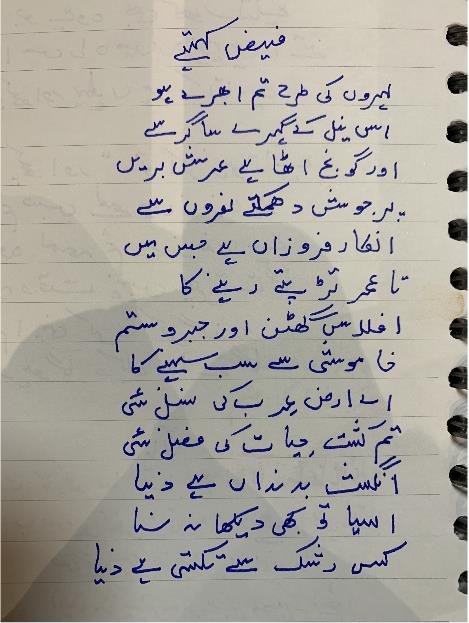
लेहरों की तरह तुम उभरे हो
इस नील के गहरे सागर से
और गूँज उठा है अर्श-ए-बरीं*
पुरजोश** धमकते नारों से
इनकार फ़रोज़ाँ# है जिस में
ता-उम्र तड़पते रहने का
इफ्लास$, घुटन और जब्र-ओ-सितम^
ख़ामोशी से सब सहने का
ऐ अरज़-ए-अरब& की नस्ल नई
तुम किश्त-ए-हयात@ की फ़स्ल नई
अंगुश्त बदंदां है दुन्या
ऐसा तो कभी देखा न सुना
किस रश्क से तकती है दुन्या
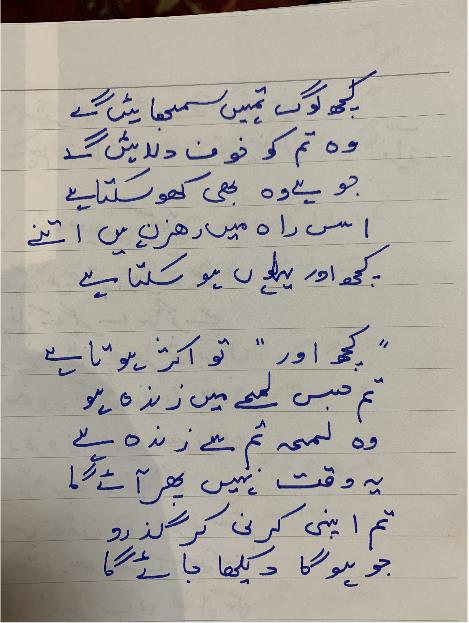
कुछ लोग तुम्हें समझाएं गे
वो तुमको ख़ौफ़ दिलाएं गे
जो है वो भी खो सकता है
इस राह में रहज़न हैं इतने
कुछ और यहाँ हो सकता है
कुछ और तो अक्सर होता है
तुम जिस लम्हे में ज़िंदा हो
वो लम्हा तुम से ज़िंदा है
ये वक़्त नहीं फिर आए गा
तुम अपनी करनी कर गुज़रो
जो होगा देखा जाए गा
*arsh-e-barii.n
अर्श-ए-बरींعرش بریں
highest sky/ throne of God
सबसे ऊँचा आसमान, नभ मण्डल,
**pur-josh
पुर-जोशپرجوش
Ardent, Lively, Wholehearted, Zealous
फा. वि. जोशीला, जोश से भरा हुआ, आवेगपूर्ण, ज़ोरदार, उत्साहपूर्ण, उमंग से भरा हुआ।
#farozaa.n
फ़रोज़ाँفروزاں
shining, luminous, resplendent
iflaas
इफ़्लासافلاس
poverty
^jabr-o-sitam
जब्र-ओ-सितमجبر و ستم
constraint and tyranny
&arz-e-arab
अर्ज़-ए-अरबارض عرب
Land of Arab
@kisht-e-hayaat
किश्त-ए-हयातکشت حیات
seeds sown, a sown field in life
literally, “fingers between the teeth”.
***
There is a bit of history to this video – of this beautiful recitation by Dr Azra Raza. I came across a short video of her reciting this – which, as it turned out, were the concluding bits taken from her talk “Shahi and Faqeeri: Lahore at its best” at NYU Urdu Conference 2018 – and could not find the full Fahmida Riaz nazm anywhere in any of her published writings.
I had of course known the original Faiz Ahmed Faiz poem that she had adapted as a tribute:
Finally, it took an email to Dr Raza to get the full nazm. As Dr Raza explained, Fahmida Riaz wrote it for Arab Spring. But the lines she quoted of course speak for all times.
 Juvenilia